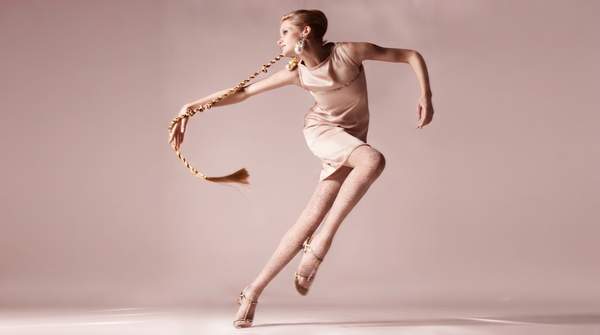
When people ask me which 20th-century fashion photographers actually mattered, I give a shorter answer than they expect: not five names, but three. Irving Penn, Richard Avedon, and Guy Bourdin each solved the same problem in radically different ways—how to make an image made for magazines and advertising do something more than document a dress. The Getty Museum, whose survey of a century of fashion photography frames the genre as "reactive," argues that because fashion photography must perpetually shift shape to hold attention, the field has been ruled by "a handful of the most creative and innovative practitioners." Penn, Avedon, and Bourdin are three of that handful, and their contrasting signatures—studio stillness, motion, and surreal color—are the vocabulary every fashion student should learn to read first.
Irving Penn: The Master of Studio Minimalism
Penn is the photographer I point to when someone claims fashion images can't be intimate. His work exemplifies, as one retrospective commentary puts it, mastery in both fashion photography and portraiture, and he was "exceptionally talented at gleaning the soul of his subjects." That is an unusual ambition for a commercial genre, and it is exactly what separated him from his contemporaries.
Consider his 1948 portrait of the model Jean Patchett, made in Peru. Patchett, one of the era's biggest models, said her international breakthrough came after that project with Penn. His own words about her reveal his method: "She is not conventionally pretty but has the real beauty of a person of deep intelligence and sympathy, and that all comes out." Penn wasn't selling a garment; he was arguing that a fashion photograph could carry character, intelligence, even sympathy.
The controlled studio was his instrument for that argument. Where other photographers chased movement or spectacle, Penn compressed the world into precise, quiet compositions—portraits and still lifes of quiet elegance. The restraint is the signature: strip away distraction, and the subject's inner life becomes the image's real luxury.
Richard Avedon: Dynamic Movement and Narrative
Avedon is Penn's opposite, and I think the two only make sense side by side. Where Penn built stillness, art historical accounts of the era consistently place Avedon among the innovators who brought energy into the frame—models caught in motion, images that feel closer to documentary than to studio artifice. The contrast with Penn's static precision is precisely what made Avedon's work legible as new: the photograph stops being a display case and becomes a moment.
That kinetic sensibility mattered commercially as well as artistically. The Getty's framing of the century shows fashion photography as a genre made for consumption in magazines and advertising, one that survives only by continually changing shape. Motion was Avedon's answer to that pressure—an image that seems to be happening rather than posed holds the viewer's eye in a way a static shot must earn through composition alone.
I'll be honest about the limits of what can be said here: the specific campaigns and collaborations that carried Avedon's style into brand imagery aren't established in the art historical commentary I'm drawing on, so I won't invent them. What survives the evidence is the stylistic contribution itself—the documentary feel, the sense that the model moved a half-second before the shutter fired.
Guy Bourdin: Surrealism and Provocative Storytelling
Bourdin is the third signature, and the strangest. Where Penn sought the soul and Avedon sought the moment, Bourdin sought the puzzle. His work used optical illusions to create "scenarios beyond the realms of reality," producing images that are, as one commentary describes them, "often puzzling and undecipherable"—and this long before Photoshop existed. That matters: every impossible scene had to be constructed physically, in camera.
Two formal choices set him apart. First, his preference for the landscape format, which distinguished him from fashion photographers who told their stories in the portrait frame. Second, his unmatched understanding of color, exemplified by his frequent, long-term collaboration with the shoe designer Charles Jourdan. That collaboration is the clearest case study in this trio of style becoming brand imagery: Bourdin's saturated, surreal palette didn't just show shoes, it gave Jourdan a visual identity.
Bourdin's provocation is his legacy. He demonstrated that a fashion photograph could withhold as much as it revealed—that narrative complexity, even undecipherability, could be more magnetic than clarity.
Comparative Styles of Iconic 20th-Century Fashion Photographers
Here is the framework I use, built by isolating each photographer's defining characteristics across the same three dimensions: signature style, technique, and collaboration. Read down the columns and the pattern emerges—three answers to one question.
| Photographer | Signature Style | Key Technique / Approach | Notable Collaboration / Subject |
|---|---|---|---|
| Irving Penn | Quiet elegance; minimalist studio portraits and still life | Controlled studio environments producing intimate, precise compositions that reveal the subject's character | Model Jean Patchett, photographed in Peru, 1948; work paired with bold graphic treatments by art directors of his era |
| Richard Avedon | Dynamic images conveying movement and energy | Models photographed in motion, creating a documentary feel that broke from static studio convention | Specific fashion collaborations not established in the surveyed commentary |
| Guy Bourdin | Bold, provocative, surreal—puzzling scenarios beyond reality | Optical illusions built in camera; landscape format; unmatched command of color | Frequent, long-term collaboration with shoe designer Charles Jourdan |
The comparison is the lesson. Penn proves the frame can be an intimate room; Avedon proves it can be a passing instant; Bourdin proves it can be a riddle. Together they cover the three registers—stillness, motion, and enigma—that later fashion imagery keeps recombining.
Identifying Enduring Influence in Fashion Photography
To fully appreciate the evolution of fashion imagery, students and professionals should analyze how these photographers' distinct stylistic choices moved the medium beyond mere documentation to a powerful art form. The Getty's century-long view supports this reading: fashion photography was made for consumption, yet the practitioners who endured were those whose creativity shaped "evolving notions of style and beauty"—not merely those who pictured clothes well.
Two caveats keep the analysis honest. This is a selection of three, not an exhaustive canon, and it covers their stylistic contributions to fashion photography rather than their full careers in other genres. It also rests on publicly available art historical commentary rather than primary portfolio analysis.
The measurable test of their legacy is the continued presence of their stylistic elements in contemporary fashion campaigns and editorial work. Watch for it directly: the next time a campaign isolates a subject against a plain studio backdrop, catches a model mid-stride, or saturates a frame with impossible color, you are seeing one of these three signatures still working. That persistence—across a century of shifting style—is the evidence that they turned a commercial assignment into an art form.
Sources
- The Getty Museum
- Fashion Photography in 10 Famous and Iconic Images — The Independent Photographer