More than just a fashion statement, the women's power suit is a symbol of an evolving role in society and the workforce. Its history traces a path from practical necessity to a deliberate expression of authority and independence, reflecting broader social changes and the ongoing struggle for gender equality. According to Dr. Shelby Robert, as cited in History is Now Magazine, women's fashion has long been a source of contention because it mirrors their position within the larger society. The suit's transformation over the 20th century—from relaxed silhouettes to exaggerated shoulders—tells a story of women breaking barriers and asserting their presence in new spheres of life.
The suit's journey began not as a statement of power, but of practicality. The origins of women's tailored clothing can be traced to equestrian attire from as early as the 1660s, when structured jackets and long skirts were designed for mobility rather than pure ornamentation. This trend toward functionality continued into the Victorian era, with practical suits appearing for activities like swimming. In the 1910s, this evolution took on political significance with the "suffragette suit." As described in an article by Lloyd Stratton for Tailor Made London, this ensemble, which often paired tailored jackets with divided skirts, became a symbol of defiance and independence. It offered women the mobility and visibility they needed as they fought for their rights, directly connecting their clothing to a desire for autonomy.
In the 1920s and 1930s, as more women entered the workforce following World War I, designers began to fundamentally rethink female attire. Coco Chanel was a revolutionary force in this era, introducing tailored suits that prioritized comfort and function. According to History is Now Magazine, Chanel's designs featured simple lines and a more masculine silhouette, offering a distinct break from the restrictive clothing that had traditionally defined womenswear. This new style allowed for greater freedom of movement, reflecting the needs of a modern, more independent woman who was no longer confined to the domestic sphere. Chanel's work was a direct response to a changing world, providing a sartorial language for women's new public roles.
The concept of the suit as an explicit expression of "power" began to take shape in Hollywood. In the 1930s, fashion designer Adrian introduced shoulder pads to the suits he created for actress Joan Crawford. As noted by Francesca Sterlacci for the University of Fashion Blog, these exaggerated shoulders were intentionally designed to exude a sense of power, establishing a silhouette that would become a defining feature of women's suiting for decades. This marked a pivotal shift where the suit began to be consciously styled to project authority and confidence, moving beyond mere practicality to become a tool of visual communication.
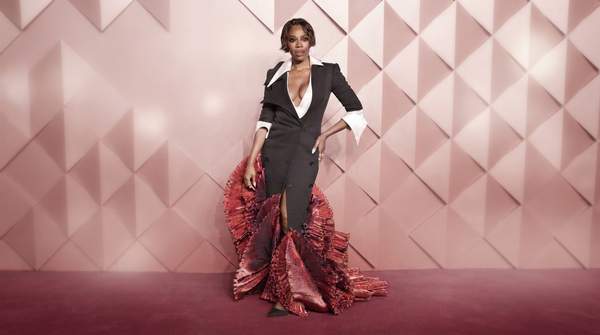
By the mid-20th century, the pantsuit emerged as a bold new statement of liberation. French designer Yves Saint Laurent's "Le Smoking" tuxedo for women was a landmark creation that feminized a traditionally masculine outfit. While such high-fashion designs were not accessible to most, they inspired more affordable styles that professional women adopted across the United States, as described in materials from the New-York Historical Society's "Women & the American Story" project. The pantsuit allowed women to occupy traditionally male-dominated spaces with a new level of sartorial confidence, asserting their right to dress as they pleased and challenging conventional gender norms in fashion.