No at-home beauty device can be crowned "the best," but the technologies inside them can be ranked by a more useful measure: how strong the evidence behind them is, and how much of your routine they demand. A 2024 review of home facial-rejuvenation devices published in the journal that hosts the PMC review found only a handful of clinical trial reports on multi-technology home devices, while consumer coverage of specific products leans heavily on manufacturer-provided results. That gap is the real story for shoppers. Here is how radiofrequency, microcurrent, and LED devices compare on mechanism, evidence, and commitment.
Understanding At-Home Beauty Device Technologies
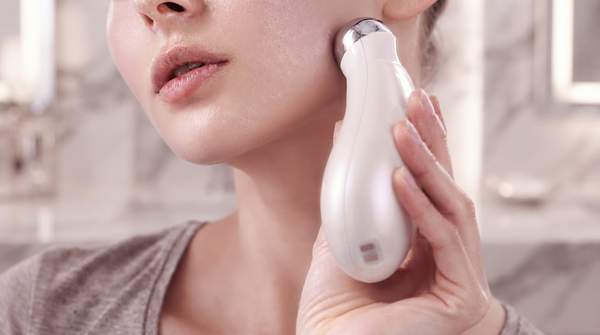
Three technologies dominate the at-home facial device market. Radiofrequency (RF) devices use electromagnetic waves to heat the deeper layers of skin, with the aim of stimulating collagen production; a typical home device operates at 1 MHz frequency. Microcurrent devices deliver low-level electrical currents intended to activate facial muscles and tone the skin. Light emitting diode (LED) devices, particularly red light around the 630 nm wavelength, are added to both of these to address additional skin concerns such as fine lines and brightness.
According to the review in Development of Home Beauty Devices for Facial Rejuvenation, these devices have gained widespread consumer attention because of their claimed ability to improve skin tightness and elasticity. But the same paper is blunt about the state of the field: there is controversy within the industry regarding the effectiveness and safety of these devices, and the review set out to verify both against defined efficacy indicators. In total, its authors found just three clinical trial reports on home beauty devices combining multiple technologies.
That scarcity matters. When a device box says "clinically proven," it may be referring to a randomized controlled trial with blinded assessment — or to something far thinner. The technology itself being plausible is not the same as the specific device in your hand having been tested.
Comparing Popular At-Home Devices: RF+LED, Microcurrent+LED, and Red Light Wands
The clearest way to see the trade-offs is to put the device categories side by side. The table below juxtaposes each technology's mechanism, the type of evidence supporting its efficacy claims, and the usage commitment it requires. The pattern that emerges: the devices with the strongest independent evidence also demand the most disciplined routines, while the most convenient options tend to rest on manufacturer-reported results.
At-Home Beauty Device Comparison Matrix
| Device / Technology | Primary Mechanism | Reported Efficacy (Evidence Type) | Usage Commitment |
|---|---|---|---|
| RF + LED (e.g., YA-MAN) | Radiofrequency (1 MHz) heats deeper skin layers to stimulate collagen; combined with 630 nm red LED light | Randomized controlled trial: 33 participants, blind 0–9 scoring showed significant improvement in facial wrinkles and sagging in the treatment group (reported in the 2024 PMC review) | Five treatments per week for 12 weeks |
| RF + microcurrent (TriPollar) | Radiofrequency (1 MHz, max 50W) combined with dynamic muscle activation via microcurrent | Clinical trial report: 11 participants showed significant improvement in fine lines, tightness, and brightness after treatment (reported in the 2024 PMC review) | Six treatments over the trial period |
| RF + LED (Silk'n) | Radiofrequency combined with LED light | Non-randomized controlled trial: 30 participants assessed with blind Fitzpatrick scores after 21 treatments (reported in the 2024 PMC review) | 21 treatments |
| Multitasking microcurrent + LED (e.g., Magnitone FaceRocket) | Three modes: Firm (RF + red LED), Tone (microcurrent + red LED), Cool (cryotherapy, green LED, sonic massage) | Manufacturer-reported improvements in firmness and wrinkles in four weeks with daily use; no independent trial results in the available evidence | Daily use, following a structured 28-day programme |
Reading the matrix this way reveals the core trade-off. The YA-MAN radiofrequency device has a randomized controlled trial behind it, but that trial required five sessions per week for twelve weeks — a genuine lifestyle commitment. The Magnitone FaceRocket, by contrast, is an accessible entry point at £119.99 with three easy-to-use modes, but its four-week firmness and wrinkle results are, as Get the Gloss's Becki Murray notes, manufacturer-provided rather than independently verified. Neither is "better" in the abstract; they optimize for different things.
Navigating Efficacy Claims: Manufacturer vs. Clinical Evidence
Once you know the device categories, the harder skill is reading the claims. The first distinction to hold onto: a study on the underlying technology is not a study on the actual device. Get the Gloss's guidance for shoppers is to confirm whether studies were done on the device itself, check whether the study was independently performed, how many people were included, and whether results were objectively measured. An eleven-person trial and a 33-person randomized controlled trial can both be described as "clinical" evidence, but they carry very different weight.
The second distinction is study design. Among the trials catalogued in the PMC review, one was a randomized controlled trial with blinded assessments at baseline and multiple follow-up points; another was explicitly non-randomized. Blinded scoring matters because it reduces the influence of expectation on the result. The review also flags a limitation worth carrying into any purchase decision: some trials evaluated only a small facial region — the split-face radiofrequency trial by Xiaohong Shu and colleagues at West China Hospital, Sichuan University, published in Dermatologic Therapy in 2022, notes that earlier work was limited because only periorbital evaluation was performed, which motivated its use of noninvasive testing equipment to measure moisture, radiance, elasticity, color, and skin thickness.
The third factor is not evidence quality at all, but consistency. Consumer testing of at-home devices, including The Cut's writer-led rankings, repeatedly emphasizes that consistency is the deciding variable in whether users see results. A device with modest evidence that you use five times a week may outperform a better-evidenced one that lives in a drawer — which is why Get the Gloss concludes that the best gadget is not necessarily the most expensive or most feature-laden, but the one that matches your concern, has credible evidence, is safe for you, and that you will actually keep using.
Finally, be wary of dramatic before-and-after photographs with different lighting, facial expression, or camera position — a specific warning from Get the Gloss that applies across every brand in this category.
Choosing Your At-Home Beauty Device: A Decision Framework
The decision, then, is to select an at-home beauty device by prioritizing either scientifically supported efficacy — which means looking for randomized, blinded, independently conducted trials on the specific device — or ease of integration into a routine you can sustain, based on your skincare goals and lifestyle. These two priorities pull in different directions: the strongest evidence in this category came with a five-times-weekly, twelve-week protocol, while the most convenient devices rest on manufacturer-reported four-week results.
Before buying, the measurable indicator is your own ability to articulate the trade-offs: can you say, for a given device, whether its results come from an independent trial or the manufacturer, how many participants were involved, and how often you would realistically need to use it? If you can answer those three questions and still want the device, the purchase is informed rather than persuaded. And for any skin condition rather than cosmetic interest, this framework is not a substitute for professional dermatological advice.