The integrity of your skin depends on a finely tuned blend of lipids that form a protective barrier, locking moisture in and keeping irritants out. When this barrier is compromised, skin can become dry, reactive, and rough. The key to restoring its function lies in replenishing its fundamental building blocks: ceramides, cholesterol, and free fatty acids. These three components work together in a specific, synergistic relationship to rebuild the barrier's structure, and understanding their distinct roles is central to effective skincare.
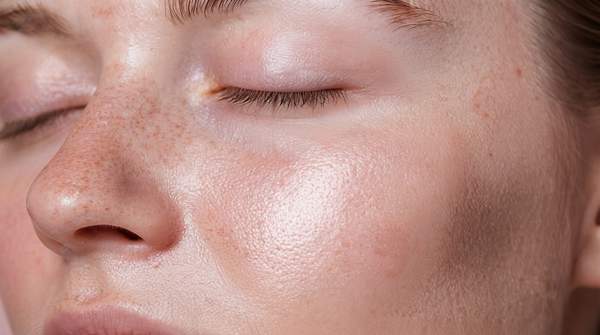
The outermost layer of the skin, the stratum corneum, functions as a sophisticated security system. Its structure is often compared to a wall of bricks and mortar. In this analogy, the "bricks" are skin cells called corneocytes, while the "mortar" holding them together is a complex matrix of lipids. This intricate arrangement is what prevents water loss from within and blocks harmful substances, allergens, and pathogens from penetrating the skin. The health and resilience of this entire structure depend almost entirely on the quality and composition of the lipid mortar.
The Skin Barrier's Lipid Matrix: A Microscopic View
The "mortar" that binds the skin's cellular "bricks" is not a simple substance but a highly organized mixture of three essential lipids. Each plays a distinct and irreplaceable role, and their balance is critical for the barrier's integrity. When this balance shifts, the barrier can lose its structural soundness and become compromised.
-
Ceramides: The Primary Sealant
Constituting roughly 50% of the lipids in the stratum corneum, ceramides are the primary moisture-sealing component of the skin barrier. According to the skincare company Dermalogica, these lipid molecules are a foundational part of the mortar. Their main job is to prevent transepidermal water loss (TEWL), the process by which water evaporates from the skin's surface. By forming an organized, water-impermeable layer, ceramides keep the skin hydrated and plump. -
Cholesterol: The Structural Stabilizer
While often associated with diet, cholesterol is an equally essential lipid within the skin. Its function in the lipid matrix is to provide structural stability and help maintain the barrier's flexibility, as explained by Spectrum Dermatology of Atlanta. It works between the other lipid molecules, helping to organize them into the resilient, layered structure required for optimal function. -
Free Fatty Acids: The Fluidity Regulators
The third key component, free fatty acids, contributes to the fluidity of the lipid matrix. This allows the barrier to remain pliable and adapt to movement without cracking. These acids also play a role in maintaining the skin's naturally acidic pH, which supports its antimicrobial properties and overall health.
The effectiveness of this lipid mortar depends not just on the presence of these three ingredients, but on their interaction in specific ratios. An article on Dr. David Jack's website notes that the correct molar ratio of ceramides, cholesterol, and fatty acids is necessary for optimal barrier repair. Dermalogica specifies this ideal balance as a 1:1:1 ratio. When this delicate equilibrium is disrupted—with too much or too little of any one component—the system falters and the barrier weakens.