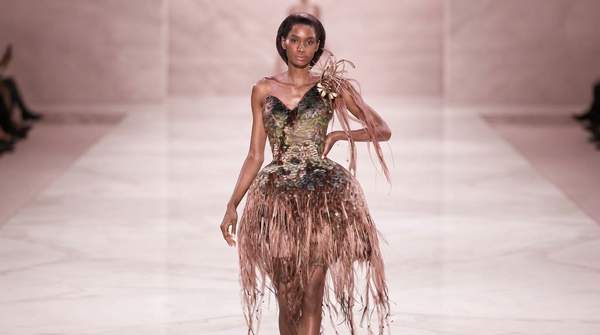
Haute couture featherwork, or plumasserie, is the craft of transforming the feathers of birds—ostrich, pheasant, rooster, turkey, goose—into accessories, costume elements, and trompe-l'oeil effects for the world's most exclusive fashion houses. It is performed by a shrinking but reviving circle of specialists: France, the historic heart of the trade, counts only four dedicated ateliers today, including Lemarié and Légeron. In this article, I want to walk you through how a feather actually becomes a couture piece, who does the work, and where the ethical fault lines in sourcing lie—because the answers are more intricate, and more contested, than the runway suggests.
The Art of Plumasserie: An Introduction to Haute Couture Featherwork
Featherwork is, by the Fondation Rémy Cointreau's description, an ancestral craft devoted to sublimating feathers for costume design, haute couture, and decorative projects. The Foundation, which documents and supports endangered savoir-faire, notes that the craft flourished in the early nineteenth century and again in the 1980s, but that workshops have gradually disappeared, leaving very few craftspeople practicing the know-how today.
What strikes me most about plumasserie is its peculiar material humility. Feathers carry a strong symbolic charge depending on the bird's race—the Foundation points to their use in the headdresses of Sioux, symbols of social rank—and the plumassier's job is to honor that fragility rather than conquer it. The trade's practitioners work for haute couture houses, luxury ready-to-wear brands, and the entertainment industry, according to le19M, the Paris craft hub that hosts featherwork among its métiers. This is not decoration in any casual sense; it is a discipline with its own vocabulary, its own tools, and its own ethical questions.
From Raw Material to Runway: The Featherwork Process
The journey begins with sourcing. The plumassier works primarily with feathers from edible birds—ostrich, pheasant, rooster, turkey, and goose among them—le19M explains, which means the material is often a byproduct of food and leather production rather than the reason a bird is raised. Feather supplier Fancy Feather, writing about ostrich specifically, notes that ostriches are farmed for meat and leather as well, which the company frames as ensuring minimal waste, and that ethical farms gather feathers during natural molting so birds are not harmed.
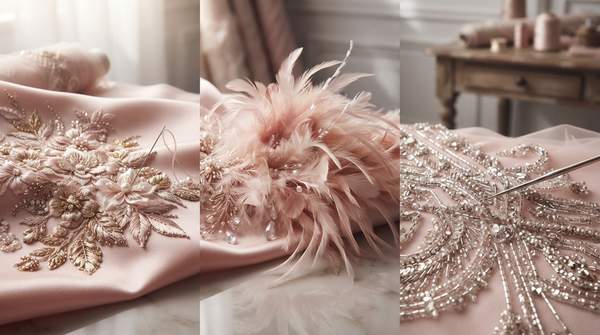
Once sourced, the raw feather must be prepared. This is where much of the artistry happens before any garment is touched: hand-dyeing to achieve precise shades, ombré effects for visual depth, and color layering to build gradients and textures. Fancy Feather documents these techniques for ostrich feathers, and while the specifics of preparation vary by species and supplier, the principle holds across the craft—color is applied by hand, feather by feather, to match a designer's vision.
Only then does the plumassier begin the transformation into form, and finally the application to the garment itself. The scale can be extraordinary: a single couture piece may involve thousands of feathers, each placed by hand. The Fondation Rémy Cointreau's profile of artisan Julien Vermeulen illustrates how far control over this chain can go—he has set up a feather laboratory in his own workshop specifically so he can control the entire production chain for his pieces, out of concern for the origin of his feathers.