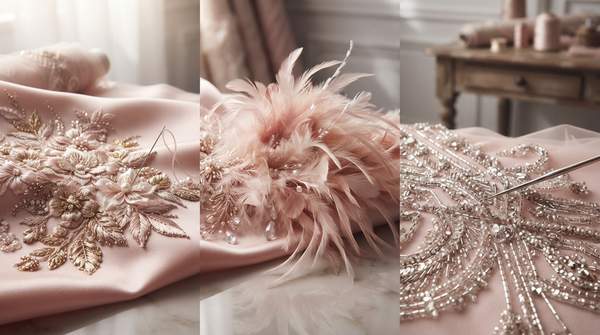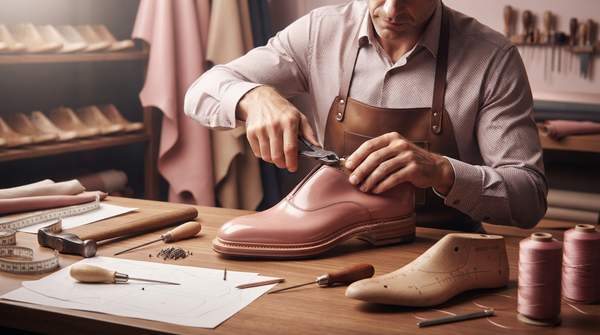
Haute couture stands as a testament to exceptional craftsmanship, a realm where traditional techniques are not merely preserved but actively evolved and transmitted through rigorous training. This exclusive sector of fashion, legally protected and overseen by the Fédération de la Haute Couture et de la Mode (FHCM), demands meticulous hand-crafted work and bespoke production, distinguishing it from ready-to-wear collections.
The artistry of haute couture relies on a deep understanding of specific skills, from the foundational construction of a garment to its intricate embellishments. Aspiring designers and artisans immerse themselves in specialized programs and atelier environments to master these techniques, ensuring the continuity of a living heritage that values precision, quality, and creative vision.
The Enduring Artistry of Haute Couture
Haute couture represents the pinnacle of fashion craftsmanship, a domain where garments are custom-made for private clients, requiring thousands of hours of hand-crafted work by specialized artisans. This sector is legally protected in France, with Paris Haute Couture Week serving as a regulated platform for luxury houses under the oversight of the Fédération de la Haute Couture et de la Mode (FHCM).
To qualify for participation, brands must meet stringent criteria. According to Fashion Theory, these include maintaining an atelier in Paris with a minimum of 15 full-time artisans and 20 full-time technical personnel. Houses are also required to produce made-to-measure garments for private clients and present a collection of at least 25 to 35 original designs, all executed to the highest standards of technical craftsmanship. This rigorous framework ensures that haute couture remains a bastion of artisanal know-how and meticulous execution, setting it apart from wider-scale ready-to-wear production.
Foundational Construction Techniques: Shaping the Silhouette
The structural integrity and exquisite fit of a haute couture garment are built upon foundational construction techniques that demand precision and an acute understanding of form. These methods are central to shaping the silhouette and ensuring each piece is a unique work of art, perfectly tailored to the individual.
Draping is a core technique where fabric is manipulated directly on a dress form, allowing designers to intuitively understand how material interacts with the body and gravity. This three-dimensional approach is crucial for creating complex volumes and achieving the perfect fit essential for made-to-measure garments. Hand sewing and haute couture finishing are equally critical, involving meticulous stitches and techniques that ensure durability, a flawless interior, and a refined exterior appearance, often with invisible seams that speak to the garment's quality.
Furthermore, bespoke cutting is essential, as it involves tailoring patterns precisely to an individual client's measurements, a hallmark of made-to-measure production. These skills are often refined through professional pathways focused on artisanal excellence, as highlighted by programs like ESMOD France's Couture Atelier specialization, which emphasizes high-precision couture techniques, hand assembly, and refined finishing.