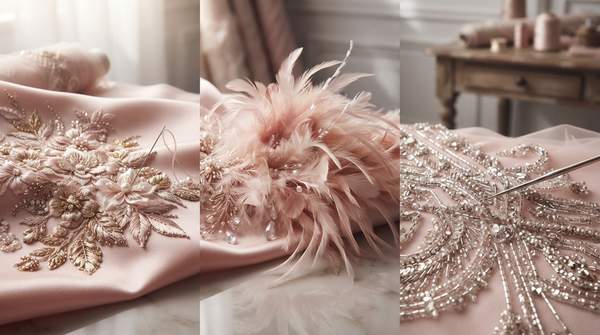
If you want to understand what separates a couture gown from anything hanging in a boutique, look at the embellishment. Three techniques sit at the heart of that craft: precision hand embroidery, professional featherwork, and Luneville hook beading. Each demands its own tools, materials, and years of trained hand skill—and together they explain why couture pieces are custom-made, exclusive, and priced for craftsmanship rather than production volume.
The Art of Haute Couture Embellishment
Haute couture is defined less by a label than by how a garment is made. Where ready-to-wear is mass-produced in standard sizes and widely available, couture is custom-made, often as single pieces, for individual clients—a distinction drawn out in comparative fashion writing that notes couture's extremely high cost stems directly from its craftsmanship and its highly individualized, artistic design process.
Embellishment is where that craftsmanship becomes visible. Polimoda, the Florence fashion school, teaches these techniques in a specialized atelier-style course under a master embroiderer with years of industry experience, describing the work as blending centuries-old traditions with contemporary applications, where "every stitch tells a story of exceptional craftsmanship." The school frames these methods as techniques typically reserved for the world's most exclusive fashion houses. That framing matters: these are not decorative shortcuts but disciplined, professional skills.