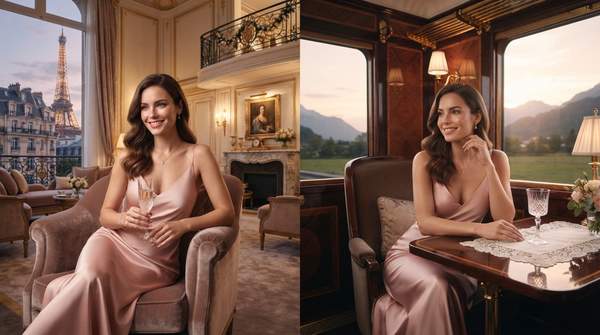
Discerning travelers seeking an ultimate European experience often weigh the distinct charms of a five-star hotel stay against the allure of a luxury train journey. While both offer unparalleled comfort and service, their experiential value, amenities, and opportunities for cultural immersion differ significantly, catering to varied preferences for pace and engagement. This comparison aims to illuminate these differences, drawing from specific examples of luxury trains and the defining characteristics of European five-star hotels.
European five-star hotels, for instance, often emphasize historical charm and a deep connection to local culture, providing a rooted experience that encourages in-depth exploration of a single locale. In contrast, luxury trains like the Venice Simplon-Orient-Express or El Transcantábrico Gran Lujo offer a dynamic "hotel room on wheels" experience, characterized by ever-changing scenic views and curated itineraries that evoke a nostalgic sense of travel, allowing for a broader sweep of cultural engagement across regions.
Defining Luxury: Hotels vs. Trains in Europe
The concept of luxury in Europe manifests distinctly between its five-star hotels and its elite train journeys. According to Ann Abel, writing for Europe Express, luxury in European hotels often prioritizes historical charm, boutique character, and a profound connection to local culture. This approach means that while U.S. travelers might associate luxury with oversized rooms or multiple restaurants, European five-star hotels may forgo some of these American-style amenities in favor of unique character and regional authenticity. European hotel star ratings, unlike subjective U.S. assessments, typically reflect a specific checklist of objective criteria, often rooted in regulation rather than commercial PR.
Conversely, luxury train travel in Europe defines opulence through a nostalgic ambiance, curated journeys, and the continuous spectacle of changing landscapes. Trains like El Transcantábrico Gran Lujo, which traverses northern Spain, are designed to feel like a five-star hotel on wheels, offering modern comforts within vintage settings. Travel Curator notes that four of El Transcantábrico Gran Lujo's carriages are original 1923 Pullman coaches, decorated to transport passengers back a century while still providing modern amenities. This moving elegance provides a distinct form of luxury, where the journey itself is as significant as the destinations visited, often evoking a "golden age" of travel, as described by Great Rail Journeys.
Accommodation and Amenities: Stationary Comfort vs. Moving Elegance
The physical spaces and amenities offered by European luxury hotels and trains present a fundamental contrast in comfort and design. European five-star hotels, as noted by Ann Abel, often provide curated local experiences, emphasizing unique character over standardized features. While they may not always feature expansive gyms or chain-style buffets, their rooms and suites are designed to immerse guests in the local environment, often within historically significant buildings. For example, many properties offer practical amenities like jogging maps for city explorers or hiking guides for countryside retreats, encouraging direct engagement with the surroundings.
Luxury trains, such as the Venice Simplon-Orient-Express, offer well-appointed cabins that aim to replicate a luxurious hotel room experience, complete with personalized service. LuxuryTrainTickets.com highlights that most cabins feature private en-suite bathrooms with showers, basins, and WCs, along with fresh towels, robes, and thoughtful amenities, making life onboard feel much like a five-star hotel. While the space in a train cabin is typically more compact than a traditional hotel room, the unique advantage is the ever-changing scenery just beyond the window. Travel Curator describes El Transcantábrico Gran Lujo's sumptuous suites, which include separate living rooms and en-suite bathrooms, all within its elegantly restored vintage coaches, blending historical charm with modern comfort.
Culinary Journeys: Regional Delights vs. Gourmet on Rails
Dining experiences are a significant highlight in both European five-star hotels and luxury train journeys, though their approaches to culinary excellence diverge. In European luxury hotels, dining often emphasizes regional cuisine and seasonal specialties, fostering a deep connection to local flavors and culinary traditions. Ann Abel of Europe Express points out that many properties prioritize this cultural and culinary focus, with examples like spring menus featuring white asparagus dishes in German-speaking countries. Some hotels, as reported by Cruise Passenger, even offer meals at Michelin-starred restaurants as part of their exclusive experiences, providing a stationary base for exploring the gastronomic landscape of a specific region.
Luxury trains, on the other hand, provide a gourmet experience on board, with full-service restaurants that are an integral part of the curated journey. For instance, the La Dolce Vita luxury sleeper train in Italy features a full-service restaurant, offering a luxurious culinary experience while traveling through scenic landscapes. Travel Curator notes that some luxury train journeys include five-course meals served by white-gloved staff, making dining an elegant and immersive part of the moving experience. This allows travelers to enjoy high-end cuisine while continuously progressing through their itinerary, with the culinary offerings often reflecting the regions the train traverses.
Cultural Immersion and Pace of Travel
The way European luxury hotels and trains facilitate cultural immersion and dictate the pace of travel offers distinct experiences for the discerning traveler. European five-star hotels foster a deep connection to local culture by serving as a stationary base for exploration. Ann Abel notes that many luxury properties offer curated local experiences, such as jogging maps for city explorers or hiking guides for countryside retreats, encouraging guests to engage directly with their surroundings and regional specialties. This allows for a deliberate, in-depth exploration of a single region's culture, history, and daily life, often at the traveler's own pace.
Luxury train journeys integrate cultural immersion into the very fabric of the trip, often evoking a "golden age" of travel. Great Rail Journeys highlights that trains like the Al Andalus, beloved by British royals, offer itineraries that include stops at historical sites such as Córdoba's Mezquita and sherry tastings in Jerez. The journey itself becomes a moving cultural experience, with on-board ambiance and planned excursions allowing travelers to explore multiple regions and historical landmarks without the need to repeatedly pack and unpack. This provides a dynamic pace, where the scenery and cultural touchpoints continuously unfold, offering a broader, yet still deeply curated, engagement with European heritage.
Luxury Travel in Europe: Trains vs. Hotels at a Glance
Discerning travelers can quickly compare the key features and experiential differences between luxury train journeys and 5-star hotel stays in Europe to align with their preferences.
| Subject | Type of Experience | Accommodation & Amenities | Cultural Immersion | Dining | Scenery/Views | Pace of Travel |
|---|---|---|---|---|---|---|
| European 5-star Hotels | Luxury defined by historical charm, boutique character, and deep local culture. May forgo some American-style amenities. | Curated local experiences, emphasizing unique character over standardized features. Amenities like large gyms or chain-style buffets may be less common. | Deep connection to local culture through curated local experiences and regional specialties. Examples include jogging maps for city explorers or hiking guides for countryside retreats. | Emphasis on regional cuisine, seasonal specialties, often Michelin-starred restaurants. Focuses on local flavors and culinary traditions. | Stationary views, often historical architecture, cityscapes, or natural landscapes from a fixed location. | Rooted and deliberate, allowing for in-depth exploration of a single location or region. |
| Luxury Trains (e.g., El Transcantábrico Gran Lujo) | Luxury defined by a nostalgic vibe, curated journeys, and ever-changing scenic views. Offers a unique 'hotel room on wheels' experience. | Well-appointed cabins, luxurious 'hotel room on wheels' experience with personalized service. Space is typically smaller than a traditional hotel room. Cabins often feature private en-suite bathrooms. | Integrated into the journey through on-board ambiance and stops at historical sites. The experience often evokes a 'golden age' of travel, exploring multiple regions. | Full-service restaurants with gourmet meals, providing a luxurious culinary experience on board. Dining is part of the curated journey, often reflecting regions traversed. | Ever-changing panoramic views from the window, offering a dynamic visual experience of diverse landscapes. | Dynamic and continuously moving, covering significant distances and multiple destinations within a single journey. |
Choosing Your Ultimate European Luxury Journey
When planning a luxury European itinerary, the choice between a five-star hotel stay and a luxury train journey hinges on a traveler's preference for either rooted cultural immersion or dynamic exploration. Travelers should select a luxury train journey if they prioritize a curated, moving experience with ever-changing scenery and integrated cultural stops. This option suits those who appreciate the journey as much as the destination, desiring a nostalgic ambiance and the convenience of a "hotel room on wheels" that continuously unveils new vistas and cultural touchpoints.
Conversely, a five-star hotel stay is ideal for those who seek a stationary base for deep local immersion, historical charm, and extensive on-site amenities. This choice allows for a more deliberate pace, enabling in-depth exploration of a single region's culture, cuisine, and historical sites. Ultimately, the chosen itinerary aligns with the traveler's primary preference for either dynamic exploration or rooted cultural engagement, ensuring a truly bespoke luxury experience in Europe.
Sources
- Best Luxury Trains in Europe – Travel Curator
- The Ultimate Luxury Train Travel Guide — Luxurytraintickets
- What 4- and 5-Star Hotels Mean in Europe Compared to the U.S. - Europe Express
- Luxury Train Travel in Europe | Luxury Train Travel | US — Scenic Train Vacations and Packages | US | Great Rail Journeys
- From Five-star Hotels To Luxury Trains: Europe’s Ultimate Journeys - Cruise Passenger
- YouTube post