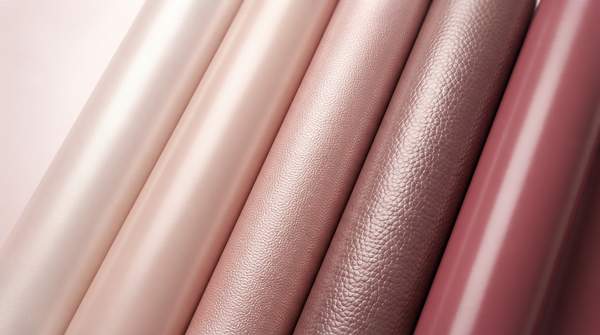
I'll say it plainly: "plant-based leather" is not a material. It's a marketing category covering wildly different substances — apple waste, mushroom root, pineapple leaves, corn residue, natural rubber — and the one thing most of them share is a quiet dependency on synthetic binders to survive real-world wear. If you're evaluating these materials for a luxury purchase, the number that matters isn't the plant on the label. It's the bio-based percentage and what's holding it together.
A 2025 scholarly review of leather alternatives by Birlie Alehegn, published in Tech Science Press's journal on renewable materials, frames the whole category around exactly this tension: bio-based content is shaped by raw material selection, synthetic binders, and processing methods, producing trade-offs between sustainability, durability, and functionality. That's the frame I'll use throughout.
Diverse Origins: A Look at Key Plant-Based Materials
The main families differ more than their marketing suggests. Apple leather is derived from apple waste, often from juice or cider production, and typically achieves 50%–60% bio-based content — with the remainder synthetic for performance. Mycelium leather is cultivated from the root structure of mushrooms, grown in controlled environments, and can be nearly 100% bio-based and biodegradable. Pineapple leather (Piñatex) uses cellulose fibers from pineapple leaf waste, an agricultural byproduct that can provide farmers an additional income stream. Corn-based leather has appeared in footwear: one designer brand's CAMPO sneaker material is a waxed canvas with 50% corn waste from the food industry, described as up to 63% biodegradable. And MIRUM, a natural-rubber material, takes a different route entirely.
Comparative Overview of Plant-Based Leather Materials
Here is the comparison I wish every brand page offered. Read it as a spectrum: the closer a material sits to fully bio-based, the more questions remain about scalability and application versatility.
| Material (Source) | Bio-Based Content | Binders / Composition | Key Trade-Off |
|---|---|---|---|
| Apple leather (apple waste, often juice/cider byproduct) | Typically 50%–60% | Polyurethane (PU) binders for durability and structure | Uses agricultural waste, but PU content limits biodegradability and any "plastic-free" claim |
| Mycelium leather (mushroom root structure) | Nearly 100% bio-based and biodegradable | Grown in controlled environments | High natural composition, but production scalability remains a challenge |
| Piñatex (pineapple leaf waste) | Plant-fiber base with synthetic content | Up to 36% PU in the performance version; around 10% (of which 5% is bio-based PU) in the most common version | Farmer income stream from waste, but PU presence makes it non-biodegradable |
| Cork leather (harvested cork) | Fully natural, 100% bio-based | Natural material | Lacks versatility in applications, per the review |
| Corn-based leather (corn waste on waxed canvas) | 50% corn waste from food industry | Waxed canvas carrier | Up to 63% biodegradable; price still high |
| MIRUM (natural rubber) | Natural inputs | FSC-certified natural rubber, natural colorants like charcoal, clay fillers, plant-based oils and waxes | Positioned as plastic-free, avoiding synthetic polymers for binding |
The pattern in the table is the finding: source material alone doesn't determine sustainability. The binder does. A pineapple leaf and an apple peel can both end up suspended in polyurethane.