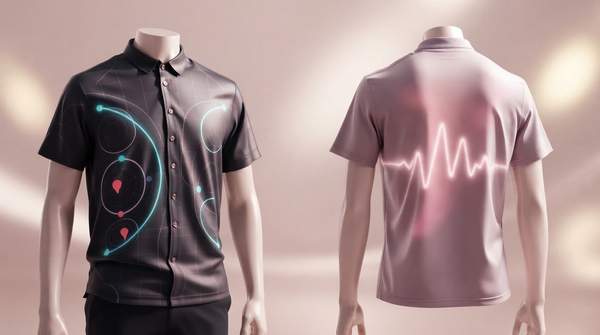
Smart textiles are not a marketing fantasy. They are fabrics with electronic components and advanced materials woven into their very structure, and a 2025 systematic review of smart textiles in luxury fashion identifies three concrete capabilities they deliver: health monitoring, temperature regulation, and interactive aesthetics. Understanding how those functions arise—through conductivity, thermo-responsive metal alloys, and color-shifting chemistry—separates the genuinely innovative garment from the one that merely has a buzzword sewn into its label.
The Dawn of Smart Textiles in Luxury Fashion
Fashion has always been an evolving, trend-driven industry, but the integration of technology into textiles represents something categorically different. The same review frames smart textiles—also called e-textiles or innovative fabrics—as materials that merge the conventional characteristics of fabric with the abilities of modern electronics, enabling applications specifically in luxury fashion. The result is a garment that does something rather than simply looking like something.
What makes the luxury context distinctive is the priority order. In sportswear, performance metrics dominate; in luxury, the technology must survive contact with drape, hand-feel, and craftsmanship. The review notes that innovations combining augmented reality, sustainable fashion, artificial intelligence, and digital printing are transforming the industry, but the underlying material science is where the real revolution lives. I find that distinction worth holding onto: a couture house adopting a sensor is not buying a gadget, it is buying a new material behavior.