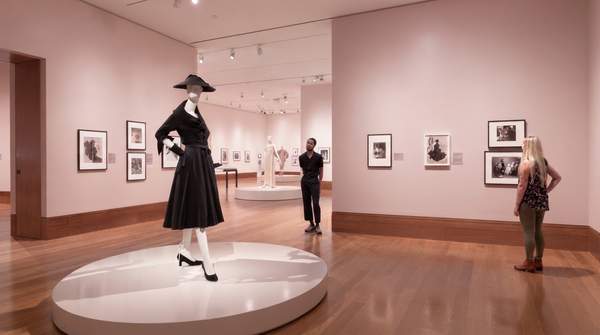
If you've been sitting on a Galliano-era Dior gown, a Balenciaga Le City, or even an unloved 2003 slingback pump, 2026 has been your year. The luxury resale market is in the middle of a full-throled love affair with the past, and — for once — the numbers are startling enough to justify the hype. Average selling prices for pieces from Dior's Galliano era have risen 81% since the beginning of the year, per eBay's SS26 Watchlist Trend Report, and listings for the Balenciaga Le City have multiplied nearly tenfold. This, to my mind, is the most interesting moment the resale market has ever had: fashion is behaving like an asset class, and collectors who understand the drivers are the ones who will profit.
2026 Archival Fashion Investment Trends: A Collector's Comparison
I've synthesized the 2026 reports from eBay, The RealReal, Fashionphile and ThredUp into a single comparison, because no one platform tells the whole story. What emerges are three distinct trend families — each with its own growth metrics and its own logic — and a collector should understand which family a potential acquisition belongs to before committing.
| Archival trend category | Key examples | 2026 growth metric | Primary driver |
|---|---|---|---|
| It-Bag Revival | Balenciaga Le City; Loewe Amazona 180; Valentino Garavani VLogo; Bottega Veneta Veneta; The Row Margaux | Le City listings up 936%; Amazona 180 up 440%; VLogo up 358%; Veneta up 158% (Sept 2025–Sept 2026, global, eBay); Margaux average sale price up 137% (Jan–Sept 2026, eBay) | Rediscovered 2000s "It" status and supply-side listing surges on resale platforms |
| Designer-Era Effect | Karl Lagerfeld-era Chanel; John Galliano-era Dior | Lagerfeld-era Chanel listings up 87% (Sept 2026 vs. year earlier); Galliano-era Dior average selling prices up 81% since start of year | Creative director transitions prompting buyers to seek predecessors' archives — "authorship and rupture" moments |
| Decade Nostalgia | 2000s (Y2K) fashion; Matthieu Blazy-era Chanel | Searches for 2000s fashion up 93%; saved searches naming a decade up 135% (The RealReal); Blazy searches up 291% March–April 2026 (eBay) | Hyper-specific, decade- and look-based searching by shoppers seeking singularity and investment potential |
A caveat I want to be clear about: listing increases can reflect rising supply as much as rising demand — sellers rushing to cash in — while average price and search increases are the cleaner demand signals. That distinction matters enormously for how you read the table, and I'd weight the Margaux's 137% price jump and the Galliano Dior's 81% price appreciation more heavily than any raw listing count.
2026's Top Archival Investment Trends: A Data-Backed Overview
The It-Bag Revival is the loudest story of the year. According to eBay data reported for the period between September 2025 and September 2026, global listings for the Balenciaga Le City increased 936%, the Loewe Amazona 180 increased 440%, and the Valentino Garavani VLogo increased 358% — with Bottega Veneta's Veneta bag up 158% over the same window, per WWD's coverage of the same report. These are not quiet, gradual appreciations. These are step-changes, and they blur the line, as nss magazine's reporting puts it, between a bag bought to be worn and a bag bought for the value it might accrue.
The Designer-Era Effect is subtler and, I'd argue, more durable. Listings for pieces from Karl Lagerfeld's tenure at Chanel were 87% higher in September 2026 than a year earlier — a surge that coincides precisely with the arrival of a new creative director, Matthieu Blazy, whose first Chanel collection reached stores as searches for his own name jumped 291% from March to April 2026. Meanwhile, the Galliano-era Dior appreciation of 81% shows how younger generations have developed what nss magazine describes as a nostalgia for eras they never lived through, rediscovering a past they know only from photographs and stories.
Then there is Decade Nostalgia, the macro trend beneath the others. The RealReal, measuring demand by search volume, reports vintage demand on its site up 432% since 2020, with saved searches including a decade up 135% over the year and searches for 2000s fashion up 93%. Fashionphile's 2026 Ultra-Luxury Resale Report, released in October, found vintage searches on its site up 112% year over year. And the wider market is moving the same direction: ThredUp's 14th annual Resale Report, released April 2, 2026, found that in 2025 the U.S. secondhand market grew nearly four times faster than broader retail clothing.
Decoding the Drivers: Why Archival Pieces Appreciate
The first and most bankable driver is the creative director domino effect. As FashionUnited's Vivian Hendriksz reported, creative director shifts spur shoppers to seek out authentic pieces from luxury houses before a new creative direction takes hold — a pattern that turns designer archives into appreciating assets precisely at moments of institutional rupture. The Chanel data is the textbook case: Blazy's arrival didn't just create interest in his work; it sent buyers scrambling backward into Lagerfeld's.
The second driver is cultural validation, and I consider it the most underappreciated by collectors. "Once institutions and brands started restaging archival collections, pulling references directly from past seasons, and exhibiting fashion alongside fine art, the market followed," Halimi says in Harper's Bazaar. "Auctions are a mirror of this cultural validation." The evidence is hard to argue with: Sotheby's Fashion Icons auction this summer featured the record-breaking sale of Jane Birkin's original Birkin bag, which went for $10.1 million including fees — with a Christian Dior "Virevolte" ensemble from the Fall 1955 couture collection fetching €6,350 as the next highest performer.
The third driver is behavioral, and it's transforming how you should search as a collector. "The hyper-specificity of the way that people search really stands out as a fundamental shift in the way people think about shopping," Kristen Naiman, chief brand officer at The RealReal, told Vogue. "The fact that people are searching for not just 'Prada 2010', but 'Prada 2010 linen' or 'Chanel 2013, look 31' tells me they have developed both a fluency around style and fashion, as well as an emphasis on singularity and one-of-oneness." Naiman's diagnosis of the root is two-pronged: people want more unique clothes, and they want to invest in items they can make a return from down the line. The savvy collector reads that as an instruction — specificity is where the alpha is.
Collecting with Conviction: A Framework for Investment
So how do you act on all this? My framework is built directly from the driver analysis, and it starts with separating the three trend families by their risk profiles.
- Ride the It-Bag Revival for speed, not safety. The Le City's 936% listing surge is dramatic, but listing growth includes sellers flooding the market. Prioritize items with demonstrated price appreciation — the Margaux's 137% average sale price increase is your demand signal — and be aware these cycles can be fast and fashion-led.
- Buy the Designer-Era Effect at moments of rupture. The Chanel evidence shows demand spikes when creative directors change. When a major house announces a transition, the predecessor's archive is where the market moves next — that's your acquisition window.
- Use the institutional validation test. A piece tied to restaged collections, museum exhibitions or major auctions — the Birkin sale, the Dior "Virevolte" at Sotheby's — carries a form of cultural underwriting that a random vintage piece does not.
- Search like the market does. If buyers are looking for "Prada 2010 linen" and "Chanel 2013, look 31," then the one-of-one pieces surfaced by hyper-specific searches are the ones competing buyers will find first. Scarcity plus specificity is the combination.
Two honest limitations. These figures come from publicly available platform reports, not proprietary sales data, so treat them as directional rather than precise. And nothing here is financial advice — this is a collecting strategy informed by market signals, not a portfolio recommendation.
Strategic Collecting: Monitoring the Archival Market
My bottom line: prioritize archival pieces from the It-Bag Revival and Decade Nostalgia trends where quantifiable growth is clearest — price appreciation over listing counts — and give serious weight to Designer-Era Effect pieces tied to influential creative directors, while watching for platform-specific pricing data on individual designer eras that these reports don't yet isolate. The scope here is bags, clothing and footwear; watches and jewelry follow their own dynamics.
The concrete indicator to monitor from here: continued increases in listing volumes, average sale prices, and hyper-specific search queries for the identified archival items and designer eras across major luxury resale platforms. When the next tranche of RealReal and eBay data arrives — the RealReal's resale report cadence puts its next update on a roughly annual rhythm — check whether the Galliano Dior price trend and the Lagerfeld-era Chanel listing growth have held, slowed, or reversed. That single data point will tell you whether the archive is a durable asset class or a very beautiful, very expensive mood.
Sources
- eBay Watchlist Trend Report SS26: Fashion Trends Between Vintage and Luxury — nss magazine
- Vintage Fashion Trends 2026: What the Resale Reports Show — Vintage Evermore
- eBay Sees Archival Fashion Listings, Prices Climb — WWD
- In Luxury’s New Resale Era, Everyone’s a Fashion Expert — Vogue
- 5 ways luxury resale is reshaping the fashion landscape — FashionUnited
- Is Archival Fashion Actually a Good Investment? — Harper's BAZAAR