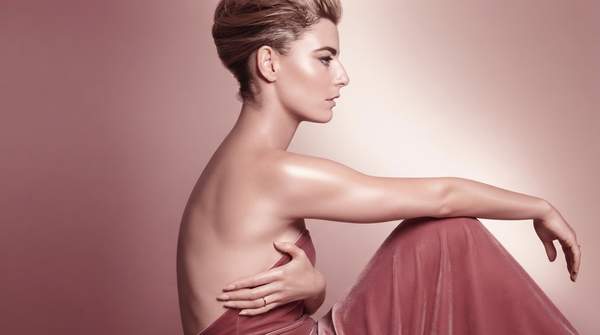
Luxury advertising did not acquire its visual vocabulary by accident. Three photographers—Edward Steichen, Richard Avedon, and Helmut Newton—each invented a distinct grammar of glamour that brands have been borrowing ever since. Steichen gave fashion photography its modernist foundation in the 1910s and 1920s; Avedon made it move and breathe; Newton made it dangerous. If you can tell those three languages apart, you can read almost any luxury campaign of the past century.
Here is the comparison, photographer by photographer, followed by a framework you can use to analyze any campaign yourself.
Edward Steichen: The Birth of Modern Fashion Photography
Start with the founder of the whole enterprise. The Art Institute of Chicago credits Edward Steichen as a groundbreaking innovator in fashion and commercial photography—one of the most influential photographers of the 20th century, whose career began at 16 in a Milwaukee lithographic firm, making photographs used as models for illustrated advertisements. That early exposure to advertising shaped everything that followed.
The pivotal moment came in 1911, when Steichen photographed designer Paul Poiret's gowns for the magazine Art et Décoration—a series now understood, as fashion historian Cassidy Zachary recounts, to be among the earliest fashion editorials ever made. This was the decisive shift from photographing clothes as merchandise to photographing them as art. The garment was no longer documentation; it was interpretation.
By 1923, Steichen had become, in the Art Institute's words, the best-known and highest-paid commercial photographer of his time, holding two powerful posts simultaneously: chief photographer for Condé Nast's Vogue and Vanity Fair, and consultant to the J. Walter Thompson advertising company. He was, in effect, the first photographer to bridge editorial fashion and brand advertising at the highest level. For luxury houses, his work established the template: fashion imagery could carry the authority of art.
The Nelson-Atkins Museum, which mounted the first exhibition devoted to the full range of his Condé Nast fashion work, credits Steichen's crisp, bold, modern style with revolutionizing fashion photography during the 1920s and 1930s—and with directly influencing his successors in the field, including Richard Avedon, Irving Penn, and Bruce Weber. Every photographer who followed worked, knowingly or not, inside the frame Steichen built.
Richard Avedon: Dynamic Elegance and Expressive Narratives
Avedon's revolution was energy. Where earlier fashion imagery relied on the composed, static pose, Avedon made the picture move. The Getty Museum, describing the post-World War II period, contrasts the two dominant American approaches: Irving Penn's quietly elegant photographs against Avedon's dynamic ones. Paired with the bold graphic treatments of art directors Alexey Brodovitch at Harper's Bazaar and Alexander Liberman at Vogue, the Getty calls this pairing groundbreaking.
Dynamism alone would have been a stylistic tic. What made it a philosophy was Avedon's treatment of the model as a person rather than a mannequin. The Getty's Icons of Style history notes that in the 1960s Avedon encouraged his models to express their personalities by smiling and laughing—expressions that had often been actively discouraged before him. That sounds small. It was not. In one move, Avedon converted luxury fashion from a display of objects into a display of character.
For luxury brands, the trade was transformative. A garment photographed on a laughing, leaping, emotionally present woman promises something different from a garment photographed on a statue: it promises a life, not just a possession. Avedon's images asked the viewer not "what is that dress?" but "who is that woman, and could I be her?" The same Getty history notes that The Independent Photographer's survey of landmark fashion books includes a 2011 monograph on Dior Couture—a house whose dramatic dresses redefined luxury style in the postwar decades, precisely the era of Avedon's ascendancy in the magazines that sold that style to America.
The limitation of Avedon's approach is worth naming: personality is harder to control than geometry. A dynamic, expressive image depends on the specific model and the specific moment, which makes it potent but less endlessly repeatable than a fixed signature style.
Helmut Newton: Provocation, Power, and Erotic Glamour
Newton took Avedon's living, breathing woman and gave her an agenda. The Victoria and Albert Museum describes his work as bringing together themes of emotional ambiguity and sex, capturing confident women in glamorous and contrived settings. Note both halves of that sentence: the women are confident, and the settings are contrived. Newton's world is a staged fiction in which the woman is the only believable element—and usually the one holding the power.
His visual sources were as loaded as his subjects. The Independent Photographer's profile of Newton describes an aesthetic inspired by film noir, Expressionist cinema, sadomasochism, and surrealism, shot not in studios but in opulent surroundings—mansions and upscale hotels. The resulting images are, in that profile's words, voyeuristic, inflected with eroticism, at times controversial, and permeated with a sense of foreboding that stirs, intrigues, and provokes the imagination.
The Getty's century-spanning history pinpoints the cultural mechanics: Helmut Newton brought an explosion of sexuality into fashion images and turned the tables on traditional gender stereotypes in the 1970s. That is the crucial formulation. Newton did not merely add eroticism to luxury advertising—he inverted the power structure that eroticism usually implied, staging women as commanding rather than available.
For luxury brands, Newton's trade-off was explicit and remains so: provocation buys memorability at the price of risk. A campaign built on emotional ambiguity and overt sexuality cannot be universally liked—and does not want to be. It defines the brand through daring, which attracts one customer decisively while alienating another. That selectivity, deployed deliberately, is itself a branding tool.
Iconic Visions: A Comparative Framework
To make the contrast concrete, here is the comparison across the dimensions that matter to a luxury advertiser: the philosophy behind the lens, the look on the page, and the brand identity each produces. One caveat before the table: this analysis rests on publicly available critical assessments from museum and curatorial sources—not firsthand interviews with photographers or brand executives—and covers these three figures rather than the whole history of fashion photography.
| Photographer | Core Philosophy | Signature Aesthetic | Impact on Brand Identity |
|---|---|---|---|
| Edward Steichen | Move fashion photography beyond documentation into artistic interpretation | Crisp, bold, modernist compositions; the 1911 Poiret series as an early fashion editorial | Founded the template of luxury imagery as art, bridging Vogue and advertising agencies |
| Richard Avedon | Capture dynamic movement and expressive personalities, not static poses | Motion and emotion; models smiling and laughing in an era that discouraged it | Made luxury aspirational as a lived, vital identity rather than a posed possession |
| Helmut Newton | Explore eroticism, power, and emotional ambiguity; challenge conventions | Noir-inflected, contrived opulent settings; confident women; overt sexuality | Established a provocative, powerful brand persona defined by daring |
Read across the rows, the pattern is clear: each man answered the same question differently. What is a fashion photograph of? Steichen said art. Avedon said a person. Newton said a power dynamic. And each answer generated a different kind of brand aspiration—cultural authority, lived vitality, and transgressive sophistication, respectively.
You can extend this framework to any campaign by asking four questions. First, distinctiveness: does the image have a recognizable visual language you could identify without a logo—Steichen's modernist clarity, Avedon's motion, Newton's noir? Second, cultural timing: did the work answer its moment, as Newton's gender-stereotype inversions answered the 1970s? Third, casting of talent: Avedon's expressiveness depended on models who could emote, which made the choice of face part of the strategy. Fourth, consistency: can the aesthetic repeat across campaigns without exhausting itself? An iconic campaign scores on all four; a merely famous one usually scores on one.
Cultivating Enduring Brand Identity Through Visionary Photography
The lesson for any luxury brand—or any student of its imagery—is that enduring identity comes from pairing, not hiring. Steichen, Avedon, and Newton succeeded because their personal philosophies aligned with a desired brand attribute: artistic authority, dynamic vitality, provocative power. A brand that wants to be loved for elegance should not commission an aesthetic built on foreboding, and vice versa. The decision, then, is this: luxury brands seeking to establish or redefine their identity should strategically partner with photographers whose artistic vision aligns with desired brand attributes, prioritizing distinctiveness, cultural resonance, and consistent application.
The measurable indicator is simple to test: consistent use of a photographer's signature aesthetic across multiple campaigns, leading to immediate brand recognition without explicit logos. If you can name the photographer—or the brand—before you see the logo, the strategy worked. By that standard, Steichen, Avedon, and Newton did not merely photograph luxury; they made it legible.
Sources
- Edward Steichen — The Art Institute of Chicago
- The Art of Imitation: Edward Steichen’s Modern Fashion Photographs of 1911 — CASSIDY ZACHARY
- Edward Steichen—In High Fashion — Nelson Atkins
- The Getty Museum
- Icons of Style: A Century of Fashion Photography | Publications and Reports — GETTY
- Top 10 Fashion Photo Books — The Independent Photographer
- 100 years of fashion photography — Victoria and Albert Museum