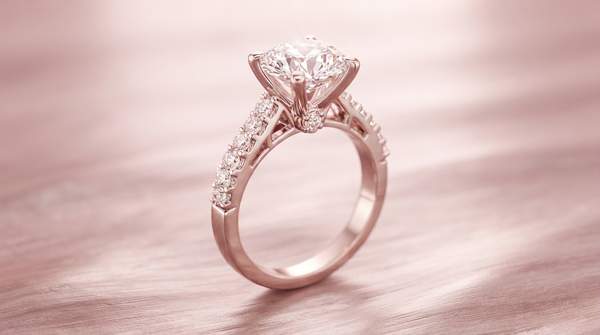
Every gemstone setting is a negotiation. You are trading light against protection, and spectacle against serviceability. The Thai Gem and Jewelry Institute lays this out plainly in its comparison of seven techniques: the settings that maximize a stone's brilliance tend to expose more of it, while the settings that shield a stone best tend to hide some of its fire — and the most visually seamless of all, the invisible setting, is also the hardest to repair when something goes wrong. My aim here is to walk you through that trade-off so you can pick a setting with your eyes open.
Prong Setting: Maximizing Brilliance with Accessible Maintenance
The prong is the classic you picture when you picture an engagement ring: a small number of metal claws rise over the gemstone's edge and fold down onto its crown. Because the metal touches only a fraction of the stone's circumference, the gem's pavilion stays open to the light — and as one manufacturing guide notes, a well-designed setting's job is precisely to let light enter the stone and enhance its brilliance, fire, and color performance.
That same openness is the prong's compromise. The setting holds the gemstone stable during daily wear, but much of the stone remains exposed, and the Thai Gem and Jewelry Institute rates the prong's security as moderate rather than high. What redeems it, in my view, is maintainability: the Institute classifies prong repair as easy, because an individual claw can be adjusted or rebuilt without disturbing the rest of the piece. For a ring you'll wear constantly, that combination — maximum brilliance, moderate security, easy service — is hard to argue with.