Luxury fashion has a paradox at its core: the same houses that obsess over craftsmanship routinely discard pristine fabric. The scale is staggering — by the calculations of Stephanie Benedetto and her team at fabric-resale platform Queen of Raw, roughly $120 billion worth of fabric ends up in landfill every year. But a quiet transformation is underway. Three distinct models — brand-led resale platforms, independent marketplaces, and direct designer integration — are converting that waste stream into new value, and I'd argue they represent the most tangible sustainability story in the industry today.
The Hidden Cost of Luxury: Understanding Deadstock Fabric
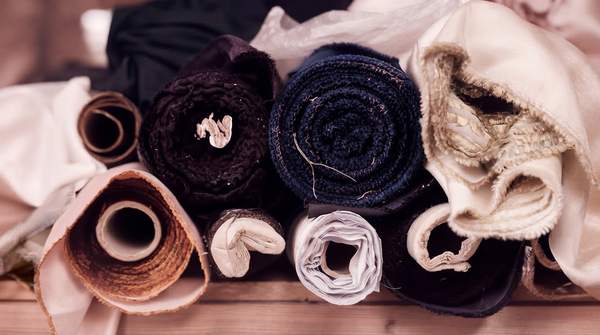
Deadstock fabric is pre-consumer waste: bolts of unused material left over from overproduction, cancelled orders, or seasonal surplus. It is not the same as post-consumer unsold garments, though both feed the industry's waste problem. This article focuses on the unused fabric itself — the silk, wool and leather sitting in warehouses after a collection ships.
The numbers explain why the term has moved from trade jargon to boardroom vocabulary. Beyond the $120 billion figure attributed to Benedetto's team, Nona Source, the resale platform created by LVMH, states that less than 1% of material used to produce clothing is currently recycled into new textiles. In other words, the overwhelming majority of textile value, once produced, is used once or never at all. For an industry built on the scarcity and permanence of fine materials, that is not just an environmental failure — it is an economic one.
Three Models for Value Creation: Innovating with Deadstock
What fascinates me about the deadstock space is that no single solution has emerged. Instead, three structurally different models have taken shape, distinguished by who operates them, where the fabric comes from, and who buys it. The comparison below lays out the distinctions, and the sections that follow unpack each model with its named examples.
Comparing Deadstock Fabric Solution Models
| Model | Key Players / Examples | Source of Fabric | Primary User |
|---|---|---|---|
| Brand-Led Resale Platforms | Nona Source, launched by LVMH | Deadstock from the group's own Maisons — over 20 luxury houses, including fashion and leather goods | Designers and brands of all sizes buying at competitive prices |
| Independent Marketplaces | Measure (U.S.-based) | Aggregated designer deadstock from various labels such as Rag & Bone and Theory | Buyers seeking quality, exclusivity and variety outside a single group's supply |
| Direct Designer Integration | Reformation; Stella McCartney via Nona Source | Deadstock purchased from platforms and built directly into new collections | The brand's own design and production teams |
The strategic logic differs in each row. A conglomerate internalizes the waste problem and monetizes its own surplus; an independent marketplace matches diffuse supply with diffuse demand; a designer treats deadstock as a creative constraint woven into the product itself.
Brand-Led Resale Platforms: Internalizing Circularity
The most consequential development came when LVMH, the largest luxury group, launched Nona Source — described by Luxiders as the first online resale platform for re-sourcing luxurious deadstock materials from the group's fashion and leather goods. Rather than treating surplus as an embarrassment to be quietly disposed of, the group turned it into a storefront.
Nona Source now stocks deadstock from more than 20 luxury Maisons, offering suiting, couture fabrics and high-end leathers — calf, cow and lamb — with European delivery in three to fifteen days and worldwide pick-up available. The platform positions itself as "a key player in creative circularity," making prestigious materials accessible to all brands, new and old, at competitive prices. The genius of the model is that it keeps value inside the ecosystem: the group recovers revenue from waste, while smaller designers gain access to materials they could never otherwise source.
Independent Marketplaces: Connecting Supply and Demand
Not every designer needs — or can reach — a conglomerate's internal platform. Independent marketplaces aggregate deadstock from multiple suppliers, and Luxiders highlights Measure as a leading example: a U.S.-based fabric store stocking designer deadstock from labels such as Rag & Bone and Theory, valued for quality, exclusiveness and variety.
The independent model serves a different market function. Where Nona Source channels one group's surplus, a marketplace like Measure pools surplus from many houses, giving buyers breadth of choice and a route into designer-grade material without a relationship with any single luxury group. These platforms, as Luxiders frames them, offer alternatives to new textiles and a practical entry point into circular fashion.
Direct Designer Integration: Crafting New Collections from Waste
The third model happens at the design desk. Reformation, as reported by Vogue, makes 15% of its products from deadstock — a meaningful share of an entire product line built on existing material rather than new production. This is deadstock as a design philosophy, not a disposal tactic.
The most vivid testimony to this model comes from Stella McCartney, who sources through Nona Source rather than only her own surplus. "I've been working with Nona Source for three years, and it has been a very organic and creative process," she says. Her observation captures the model's essential trade-off: "Working with deadstock has limitations, and you have to embrace these limitations to get creative." Deadstock arrives in fixed quantities and fixed compositions — no reordering, no custom colorways. The designers who succeed treat that constraint as the point.
Deadstock and the Circular Economy: A Sustainable Future
Why does any of this matter beyond the balance sheet? Because deadstock sourcing is circularity in its most literal form. As Fashion SVP explains, instead of feeding demand for new textile production, deadstock pulls existing material back into circulation — extending the life of fabric already made, reducing new resource extraction, and squeezing more value from what already exists. That is precisely what a circular textile economy aims to achieve.
There is also a commercial logic that makes this durable rather than trendy. Deadstock carries premium quality and built-in exclusivity — once a bolt is gone, it is gone — which, as Fashion SVP argues, lets sustainability and luxury reinforce each other rather than compete. The same source predicts that as infrastructure matures, deadstock suppliers will likely become a standard part of sustainable fabric sourcing strategy for luxury brands. The growth signals support that trajectory: Vogue reports that Queen of Raw grew 110% year-on-year with over 100,000 users, spanning fast fashion brands and luxury houses alike.
Moving Towards a Circular Future with Deadstock
My read of the evidence is straightforward: luxury fashion brands and designers should continue to explore and invest in deadstock utilization models to reduce waste and enhance sustainability. The three models are not competing — they are complementary layers of an emerging reuse infrastructure, from LVMH's internal platform to independent marketplaces to designers building collections around constraint.
The measurable indicator to watch is increased adoption rates of deadstock fabrics in new collections and the emergence of new platforms or partnerships dedicated to material reuse. Reformation's 15% share and Stella McCartney's three-year Nona Source collaboration give the industry concrete benchmarks; the next milestone is whether those figures climb, and whether more groups follow LVMH in opening their warehouses. Against a $120 billion annual waste stream and a sub-1% textile recycling rate, the market for turning surplus into value has barely been tapped.
Sources
- Fashion has a waste problem. These companies want to fix it — Vogue
- HIGH-END DESIGNER DEADSTOCK MATERIALS – Nona Source
- List Of Luxury Deadstock Fabrics Resale Platforms — Sustainable Fashion - Eco Design - Healthy Lifestyle - Luxiders Magazine
- Why Deadstock Fabric Is Becoming a Luxury Fashion Essential – Fashion SVP — Fashionsvp