Biomimicry in fashion is the deliberate emulation of nature's forms, processes, and material strategies to solve the industry's most entrenched environmental problems—and it is already producing concrete textile innovations rather than conceptual ones. Three examples illustrate the range of the approach: Piñatex, a leather-like material spun from pineapple leaf waste; chitosan-based fabric, built from a polysaccharide in crustacean shells; and structural coloration, which produces vivid color through engineered nanostructures rather than chemical dye. Each borrows a different natural strategy—agricultural byproducts, marine biopolymers, and the physics of butterfly wings—to displace a conventional material with a heavy environmental footprint.
Nature's Innovations: Biomimetic Materials in Fashion
What distinguishes biomimicry from ordinary use of natural materials is the transfer of a strategy, not merely a substance. A designer working biomimetically asks how nature has already solved the problem at hand—waterproofing, structural strength, coloration, decomposition—and then adapts that solution to a human manufacturing context. In fashion, this reframing matters because the industry's dominant materials are defined by extraction and pollution: animal leather by livestock and tanning, petroleum-based synthetics by fossil inputs and persistence in landfill, and conventional dyes by water-intensive, chemical-laden processes.
An essay published on the Biomimicry Institute's Medium channel frames the ambition in systemic terms, presenting biomimicry as the basis for a vision of a regenerative fashion system rather than a catalog of greener inputs. The three material innovations examined below show that the concept operates at multiple scales simultaneously: a single fiber, a biopolymer chemistry, and a physical optical effect. Together they demonstrate why nature is a productive design reference for an industry searching for alternatives to its most damaging conventions.
Piñatex: Pineapple Leaf Fiber as Leather Alternative
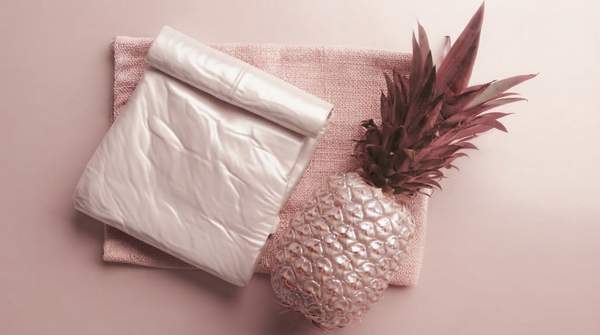
Piñatex begins with a problem of waste rather than a problem of material scarcity. Pineapple harvesting leaves behind vast quantities of leaves that are a waste product of the pineapple industry, and it is these leaves—specifically the strength and durability of their fibers—that inspired the material. According to an account of biomimetic material innovation by a Swiss transformation consultancy, Piñatex is a leather-like material made from pineapple leaves that serves as a sustainable, cruelty-free alternative to traditional leather, requiring less water and producing fewer carbon emissions in its production.
The elegance of the model lies in its circularity. Rather than cultivating a new crop on dedicated land, Piñatex upcycles a byproduct that already exists at scale, converting an agricultural residue into a premium-feel material. For luxury fashion, the significance is twofold: the material answers the ethical objections attached to animal-derived leather while answering the resource objections attached to it, since the fiber's performance characteristics—strength and resilience—are precisely the qualities the pineapple plant evolved to protect its fruit. The material thus mimics not just a substance but a lesson in how biological systems make use of everything available.