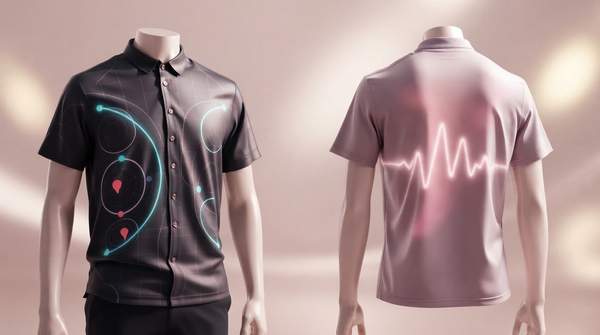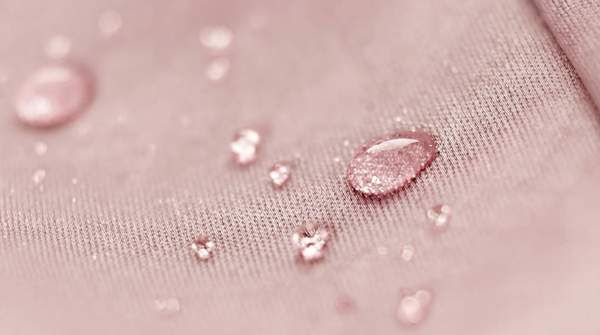
Smart fabrics fall into two families with fundamentally different physics. Self-cleaning textiles use light to break down dirt; temperature-regulating textiles manage heat and moisture through phase changes, responsive polymers, or structural change. Understanding which mechanism a garment uses is the difference between buying a fabric that cleans itself in sunlight and one that buffers your body heat — two claims that sound similar and are, in fact, chemically unrelated.
The Rise of Smart Fabrics in Luxury Ready-to-Wear
Textile innovation has quietly moved from the laboratory into the wardrobe. Outlast, a specialist based in Heidenheim, Germany, markets a heat-management technology originally developed by NASA, applied through microencapsulated natural wax that can be bonded to almost any textile material. The company positions its fabrics as adding "functionality and comfort" across clothing, shoes, and helmets — language aimed squarely at premium and performance markets rather than commodity apparel.
Meanwhile, researchers at Shanghai Jiao Tong University in China have demonstrated a self-cleaning cotton that requires no soap, water, or machines — only a sunny day. Both developments point in the same direction: garments engineered at the material level to do work the wearer once performed, whether that work is laundering or adjusting layers.
Self-Cleaning Fabrics: Harnessing the Power of Light
The self-cleaning fabric developed at Shanghai Jiao Tong University works by cleaning itself using only sunlight. The textile needs no soap, water, or machines; it simply has to be hung up outside in nice weather. The mechanism is photocatalysis — a light-activated coating that decomposes the organic matter constituting dirt and stains, rather than lifting soil away the way a detergent would.
That distinction matters. Conventional washing physically removes grime; photocatalysis chemically breaks it down. The cotton fabric has been successfully tested, and researchers expect the approach to be applied to other fabrics as well. For a designer, the appeal is obvious: a garment that refreshes itself on a clothesline eliminates the wear, water, and energy of repeated laundering — a genuine longevity argument, not merely a convenience one.
Temperature Regulation: A Spectrum of Smart Solutions
Temperature regulation is not one technology but several, and they operate on different principles. Outlast's approach is proactive heat management: microcapsules of natural wax absorb, store, and release excess body heat as your temperature fluctuates, working by phase change rather than by wicking sweat after the fact. HeiQ's Smart Temp finishing takes a different route, using hydro-functional polymers that react to temperature and dynamically evaporate moisture to complement the skin's natural cooling — an effect that gradually decreases as the body cools and moisture levels drop.
A third approach, published by University of Maryland researchers in 2019, uses moisture-responsive carbon nanotubes woven into fabric. Here the material itself changes structure in response to humidity, altering how the fabric transmits heat. Three mechanisms, one goal — but they trigger differently, and a discerning buyer should know which is which.
Phase-Change Materials (PCMs): Storing and Releasing Heat
PCMs are the most established of the group. In Outlast's implementation, microencapsulated natural wax is applied to the textile; when your skin warms, the wax absorbs and stores the excess heat; when your skin cools, it releases that heat back. The result, according to the company, is a balanced microclimate next to the skin despite fluctuating external temperatures.
Outlast claims up to 48% less sweating from its temperature-regulating fabrics, with tests for applications including clothing, shoes, and helmets conducted by C. Russ – INSIDE CLIMATE, an independent test laboratory in Munich, using its THG AreaView and SleepView methods. The company frames the technology as working through "natural wax and the laws of physics" — a phase change, not chemistry, is doing the work.
Comparing Smart Fabric Technologies
The table below categorizes each technology by its underlying mechanism, so you can distinguish a fabric that stores heat from one that cleans itself with light.
| Technology | Scientific Principle | Primary Function | Key Benefit |
|---|---|---|---|
| Self-cleaning fabric (Shanghai Jiao Tong University) | Photocatalysis: a light-activated coating decomposes organic matter | Breaks down dirt and stains using sunlight alone | No soap, water, or machines needed; reduced maintenance and longer garment life |
| Phase-Change Materials (Outlast®) | Microencapsulated natural wax absorbs, stores, and releases body heat | Proactively manages heat to prevent overheating and chilling | Up to 48% less sweating; balanced climate despite fluctuating temperatures |
| Hydro-functional polymers (HeiQ Smart Temp™) | Polymers react to temperature and dynamically evaporate moisture | Evaporative cooling that complements the skin's own regulation | Cooling when warm; effect fades as the body cools and moisture decreases |
| Moisture-responsive carbon nanotubes (University of Maryland, 2019) | Fabric structure changes in response to humidity | Alters heat transmission as the wearer sweats | Adaptive breathability driven by the body's own moisture signal |
Read the principle column first: if heat is being stored and released, you are looking at PCMs; if moisture is being evaporated, polymers; if the fabric's structure itself shifts, nanotubes; if light is breaking down dirt, photocatalysis. No mechanism substitutes for another.
User Benefits and the Future of Performance Luxury
Outlast enumerates the practical payoffs of temperature-regulating fabrics across applications: better sleep from a balanced temperature, less blistering and odor in shoes due to reduced moisture, reduced energy consumption and improved fluid balance for athletes, better concentration in occupational safety textiles, and — in the company's words — a significantly reduced risk of catching a cold during hiking, gardening, or other leisure activity.
One Outlast veteran captures the category's pitch: "Even after many years at Outlast, I still love the 'wow effect' when customers feel the 'Outlast® difference' for the first time by touching our products." That sensory immediacy is what luxury ready-to-wear trades on — performance you can feel, engineered invisibly into the material.
The Practical Impact of Temperature-Regulating Fabrics
Choose temperature-regulating fabrics for enhanced comfort and performance in fluctuating conditions. The measurable indicator is reduced sweat production and a consistently balanced body climate during wear — outcomes Outlast reports at up to 48% less sweating in independent laboratory tests. When evaluating a garment, ask which mechanism it uses: PCM capsules that buffer heat, polymers that evaporate moisture, or nanotubes that restructure with humidity. The science, not the label, tells you what to expect.