The Glossy Times

What is the Evolution of Haute Couture Craftsmanship and Relevance?

Despite frequent discussions about its 'death,' the term 'Haute Couture' is legally protected in France, requiring ateliers to employ at least 20 full-time technical staff and present 25 original desi

MT
Marcus Thorne

June 23, 2026 · 4 min read

A master couturier meticulously hand-stitching an intricate detail on a luxurious, unfinished haute couture gown in a sunlit atelier.

Despite frequent discussions about its 'death,' the term 'Haute Couture' is legally protected in France, requiring ateliers to employ at least 20 full-time technical staff and present 25 original designs twice a year. This stringent framework, established by the Chambre Syndicale de la Haute Couture, ensures each garment is a bespoke creation, meticulously crafted for a private client. The meticulous handwork and limited production define its exclusivity, setting it apart from the broader fashion industry.

Haute couture maintains stringent legal definitions and traditional craftsmanship, but its cultural impact is diffusing while its relevance is frequently questioned. This tension creates a compelling narrative, as the fashion world observes an art form striving to preserve its heritage amidst evolving consumer demands and technological advancements.

Haute couture will likely continue as a highly exclusive, legally protected art form, but its influence will increasingly manifest through technological innovation and a broader, less regulated 'couture' aesthetic in the wider fashion industry. This shift hints at a future where its methods may evolve even as its core principles remain.

What Defines True Haute Couture?

The term 'Haute Couture' became a legally registered designation of origin on January 23rd, 1945, according to Fhcm Paris. This legal protection prevents casual use by brands not meeting its rigorous standards: an atelier in Paris with at least 20 full-time technical staff, 25 original designs presented twice yearly, and made-to-order pieces for private clients, as detailed by France Fr. These strictures ensure couture remains an exclusive art form, far removed from mass production. Its twice-yearly presentations, typically in January and July, are more art than commerce, solidifying its unique place in global fashion.

The Enduring Debate: Is Haute Couture Dying?

Discussions about haute couture's 'death' are frequent, even highlighted by The New York Times. This ongoing debate reveals a tension between its legally enforced exclusivity and its perceived vitality. The term 'couture' itself has seeped into pop culture, used by many brands outside the 'Haute Couture' label, according to France Fr. This widespread appropriation dilutes its prestige and meaning for the public, creating a chasm between its official definition and its diluted public perception. The legal designation of 'Haute Couture' has inadvertently created a gilded cage, preserving a traditional craft while isolating it from the technological and sustainable shifts reshaping the broader fashion industry.

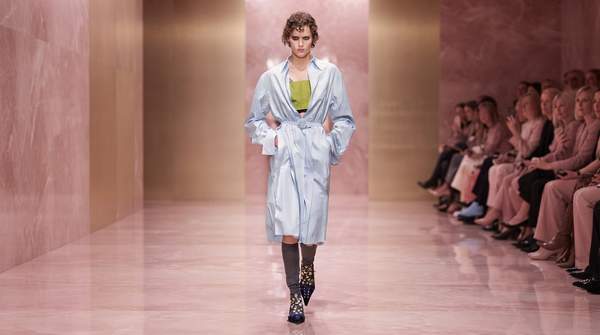
Craftsmanship Meets Code: The Digital Evolution of Design

Virtual reality and 3D modeling are standard design tools, according to ifaparis. Though haute couture remains rooted in traditional ateliers and manual craftsmanship, these digital advancements are entering its initial design phases. Designers can now prototype garments virtually, refining silhouettes and experimenting with fabrics before any physical material is cut. This embrace of digital tools by even the most traditional houses allows for greater precision and efficiency, potentially bridging the gap between couture's meticulous handcraft and the broader industry's rapid technological advancements. It marks an evolution in design conception, even as execution stays true to age-old techniques.

Beyond the Runway: Couture's Indirect Influence on Sustainable Fashion

The second-hand fashion sector is projected to grow 2–3 times faster than traditional retail, according to ifaparis. This boom signals a rising consumer appreciation for durability and unique pieces. Haute couture, with its emphasis on quality, longevity, and made-to-order garments, inherently aligns with these sustainable principles, albeit through a luxury lens. While couture pieces rarely enter the mainstream second-hand market, their ethos of enduring value influences a broader shift towards conscious consumption. This means haute couture's aspirational values of craftsmanship and permanence resonate with evolving consumer priorities, even as its strict definition maintains exclusivity.

Your Questions About Haute Couture, Answered

What are the key techniques in haute couture?

Haute couture relies on intricate hand-stitching, elaborate draping, and precise embroidery. Artisans often spend hundreds of hours on a single garment, employing generational methods. These skills ensure the unique fit and exquisite finish synonymous with true couture.

What is the difference between haute couture and ready-to-wear?

Haute couture garments are custom-made for an individual client, requiring multiple fittings and crafted entirely by hand in a Parisian atelier. Ready-to-wear (prêt-à-porter) collections, conversely, are mass-produced in standardized sizes and sold globally. Ready-to-wear allows designers wider reach and quicker trend adaptation.

How has haute couture changed over time?

While haute couture's legal definition has remained consistent since 1945, its patronage and presentation have evolved. Historically, it served a small, elite clientele. Today, its shows increasingly function as marketing spectacles, influencing trends and generating brand visibility beyond direct sales. Celebrity culture has also shifted how these exclusive garments are publicly showcased.

Haute couture's future influence will likely be felt more through aspirational trickle-down effects and its role as an artistic incubator, particularly if it continues to subtly integrate digital design tools without compromising its unparalleled craftsmanship.