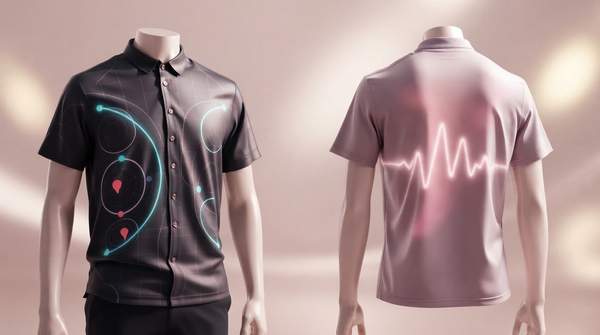
Luxury shoppers who engage with AI virtual try-on are 50 percent more likely to purchase overall, demonstrating a dramatic shift in how high-end consumers interact with brands. A pronounced uplift in purchase intent, as reported by The Business of Fashion, redefines the luxury customer experience, with AI immersive tech now directly influencing high-value transactions. The integration of advanced artificial intelligence into luxury retail is increasingly central to consumer decision-making in 2026, moving beyond mere novelty to become a critical sales driver.
The long-held perception of luxury retail as inherently human-centric and exclusive is being fundamentally challenged. AI-driven personalization and efficiency are proving far more effective at driving engagement and sales, directly confronting the traditional emphasis on physical interaction and human sales expertise. This tension highlights a critical juncture for brands navigating evolving consumer expectations and technological capabilities.
Luxury brands that fail to embrace sophisticated AI integration risk falling behind competitors who are already leveraging these technologies to capture significant market share and redefine customer loyalty.
The Billion-Dollar AI Boom in Luxury
The global AI in luxury retail market was valued at $4.8 billion in 2025, with projections indicating a substantial expansion to $21.6 billion by 2034. The rapid financial growth from $4.8 billion in 2025 to a projected $21.6 billion by 2034 underscores a strategic pivot within the high-end sector, where technological investment is becoming paramount. The market is expected to grow at a Compound Annual Growth Rate (CAGR) of 18.1% during the forecast period of 2026-2034, according to dataintelo. The market valuation of $4.8 billion in 2025, projected to reach $21.6 billion by 2034 with an 18.1% CAGR, confirms that AI is not a transient trend but a deeply embedded and rapidly expanding component of luxury retail strategy. The substantial capital flowing into AI solutions, evidenced by the market's growth from $4.8 billion to $21.6 billion, reflects a clear industry consensus on its capacity to enhance operational efficiencies and elevate the customer journey. The financial trajectory of the AI in luxury retail market, valued at $4.8 billion in 2025 and projected to reach $21.6 billion by 2034, provides the backdrop for understanding the tangible impacts on customer experience, moving beyond speculative interest to concrete, data-driven investment.
AI's Direct Impact on Customer Experience and Sales
In 2025, Customer Experience Management emerged as the leading application segment within the AI in luxury retail market, capturing a significant 27.6% revenue share. Customer Experience Management's dominance, capturing a significant 27.6% revenue share, highlights AI's core value proposition in the luxury sector: its ability to directly improve consumer interactions and drive tangible business results. The 27.6% revenue share captured by Customer Experience Management underscores a strategic investment in front-end solutions, aiming to optimize every touchpoint from initial browsing to post-purchase engagement.
| Metric | 2025 Share/Impact | Source |
|---|---|---|
| Customer Experience Management Revenue Share | 27.6% | dataintelo |
| AI Virtual Try-on Conversion Rate Increase | Up to 10 times higher | The Business of Fashion |
The 27.6% revenue share for Customer Experience Management and up to 10 times higher conversion rates for AI virtual try-on demonstrate AI's quantifiable effect on luxury retail performance.
The direct correlation between AI-powered interactions and increased sales is further evidenced by conversion rates among luxury consumers. These rates jump up to 10 times higher when using AI virtual try-on, directly contradicting the long-held belief that physical interaction and human sales expertise are paramount for closing high-value luxury sales. The fact that conversion rates jump up to 10 times higher when using AI virtual try-on indicates that AI's primary value in luxury retail is its proven ability to directly improve customer experience, leading to significantly higher engagement and conversion rates, fundamentally reshaping sales strategies.
The Mechanics Behind AI's Success in Luxury
AI-driven models have streamlined customer-sales associate pairing and improved clienteling efforts, resulting in a 100% uptick in engagement. The 100% uptick in engagement, documented by tigeranalytics, illustrates the precision with which AI can mimic and even enhance the most valued aspects of a human sales relationship. The technology optimizes the matching process, ensuring that clients are connected with associates best suited to their preferences and purchase history, thereby fostering deeper, more productive relationships.
The foundational reliance on sophisticated software further underpins AI's success. The software component held the largest share of the AI in luxury retail market at 52.4% in 2025, according to dataintelo. The software component's dominance, holding the largest share of the AI in luxury retail market at 52.4% in 2025, indicates that the efficacy of AI in delivering hyper-personalized interactions and driving unprecedented levels of customer engagement is directly tied to robust, intelligent software infrastructure. The ability to process vast datasets, learn consumer behaviors, and adapt recommendations in real-time is a direct function of these advanced software solutions, which form the core of AI capabilities in this sector.
Evolving Roles and Market Leadership in an AI Era
AI will dramatically change almost everything in retail, leading to the evolution of many jobs and the emergence of new ones, as discussed at the RLC Fashion Summit in Milan, according to WWD. The dramatic changes AI will bring to retail, leading to the evolution of many jobs and the emergence of new ones, implies that while AI promises significant gains for luxury brands, it also necessitates a re-evaluation of human roles within the industry. The shift moves from purely transactional sales positions to those focused on AI management, data interpretation, and augmenting AI capabilities, requiring adaptation and new skill sets from the workforce.
The future luxury sales associate will likely act as a high-level consultant, leveraging AI insights to provide even more tailored and exclusive service, rather than performing routine tasks. The evolution of the luxury sales associate to a high-level consultant ensures that human interaction, when it occurs, is elevated and highly specialized, complementing the efficiency of digital systems. Brands investing in AI are also investing in reskilling their human capital, ensuring that the human touch remains a valuable, albeit redefined, component of the luxury experience.
The Future of Luxury: AI-Driven Growth and Efficiency
The strategic integration of AI into clienteling and sales associate pairing is positioned to unlock further revenue streams and deepen customer loyalty.
- AI-driven models streamlined customer-sales associate pairing and improved clienteling efforts, resulting in a 50% increase in customer spends, according to tigeranalytics.
The 50% increase in customer spends resulting from AI-driven models suggests that the next phase for luxury retail involves leveraging AI to further refine clienteling and sales processes, directly translating enhanced customer engagement into substantial revenue growth. Brands will increasingly rely on AI to predict preferences, optimize inventory, and personalize marketing efforts at an unprecedented scale, moving towards a predictive luxury model. The ability of AI to increase individual customer expenditure by 50% demonstrates a clear path for sustained financial performance and market expansion, reinforcing AI's role as a direct driver of profitability.
Strategic Imperatives for Luxury's AI Future
- Luxury brands clinging to purely human-centric service models are actively leaving money on the table, as AI-driven personalization, like virtual try-on, has proven to increase purchase likelihood by 50% and conversion rates by a staggering 10 times (The Business of Fashion).
- The rapid projected growth of the AI in luxury retail market to $21.6 billion by 2034, with Customer Experience Management as its leading application, signals that the future of luxury is not just about exclusive products, but about exclusive, hyper-personalized digital experiences delivered at scale (dataintelo).
- Companies that fail to integrate AI into their clienteling and customer-sales associate pairing strategies risk losing out on significant revenue, given that AI-driven models have already demonstrated a 50% increase in customer spends and a 100% uptick in engagement (tigeranalytics).
- North America's dominance in the AI in luxury retail market, holding 38.2% revenue share in 2025, indicates a regional leadership in adoption and innovation that other markets must emulate for competitive advantage and accelerated technological integration.
The strategic imperatives outlined above underscore the urgency for luxury brands to fully embrace AI as a core component of their business model. The data confirms that neglecting AI-driven personalization and efficiency leads to lost revenue and diminished market position. Luxury brands must recognize the strategic importance of AI, drawing lessons from leading regions and successful implementations to achieve both market dominance and significant operational efficiencies.
The luxury sector's embrace of AI is not merely an operational upgrade; it is a fundamental redefinition of value and service. By Q4 2026, brands like LVMH and Kering, through their continued strategic investments in AI-powered clienteling and immersive customer experiences, will likely solidify their market leadership, further marginalizing competitors who prioritize traditional, less efficient models.. This shift confirms that the future of luxury retail is inextricably linked to sophisticated technological integration and data-driven personalization.